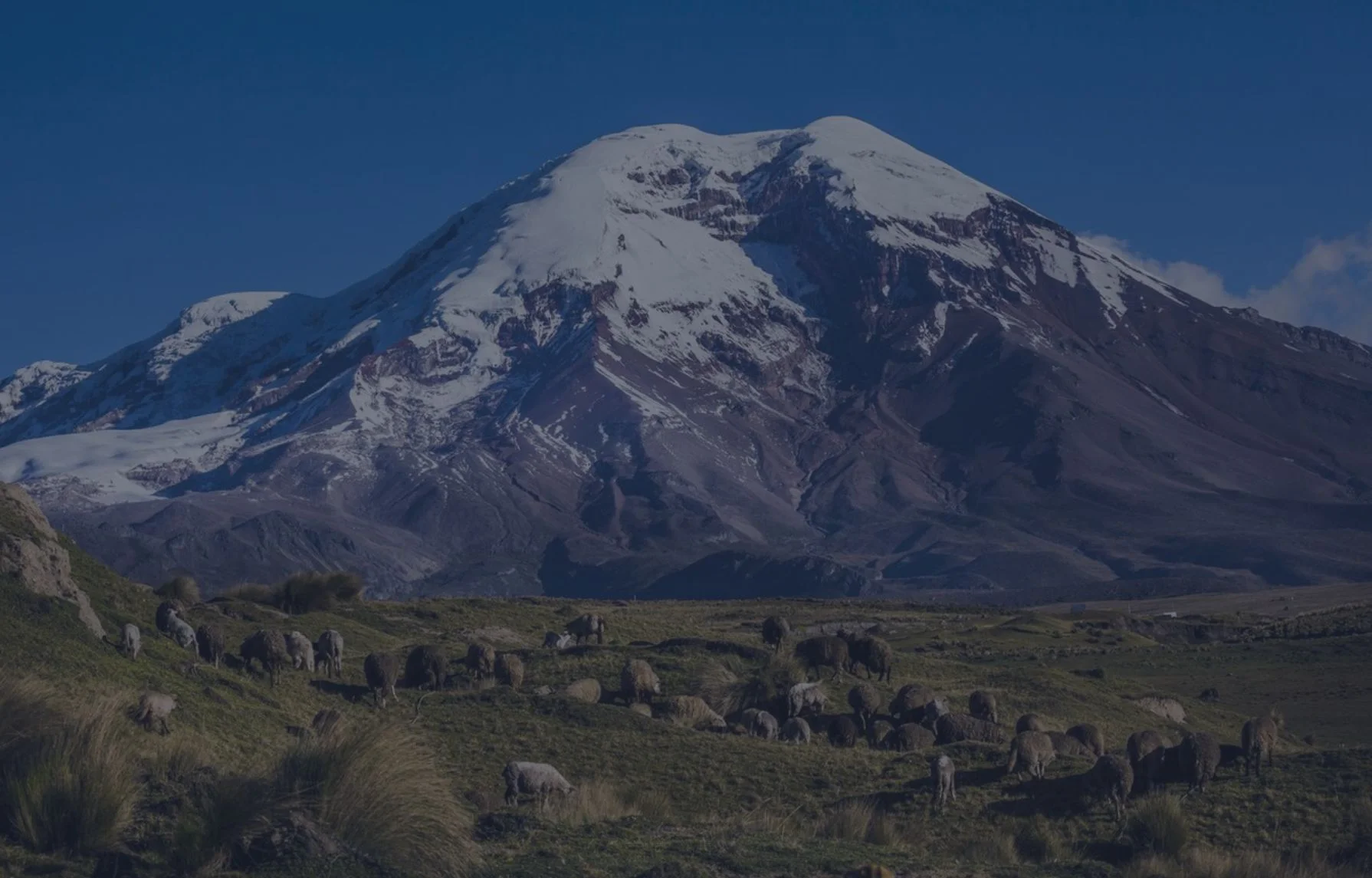
Chimborazo , Ecuador, is not just the country's highest volcano. It's the point on Earth farthest from the planet's center and, because of its location on the equator, the place from which anyone can be closer to the sun than from any other mountain in the world—including Mount Everest. That's no small fact. It's the reason why this volcano has a symbolic and scientific significance that goes far beyond its height.
Visiting Chimborazo from Riobamba is one of the most accessible and memorable experiences Ecuador has to offer. You don't need to be a mountaineer. You don't need specialized equipment to reach the first refuge. You just need to know how to prepare, when to go, and what to expect.
This guide has everything you need to plan your visit correctly: geographical data, routes, weather conditions, what to bring and how to get there from Riobamba.
What is Chimborazo?: facts that few know
Chimborazo stands at 6,268 meters above sea level. It is the highest volcano in Ecuador and the highest peak in the Ecuadorian Andes. However, its most surprising fact has nothing to do with conventional height, but rather with the geometry of the planet.
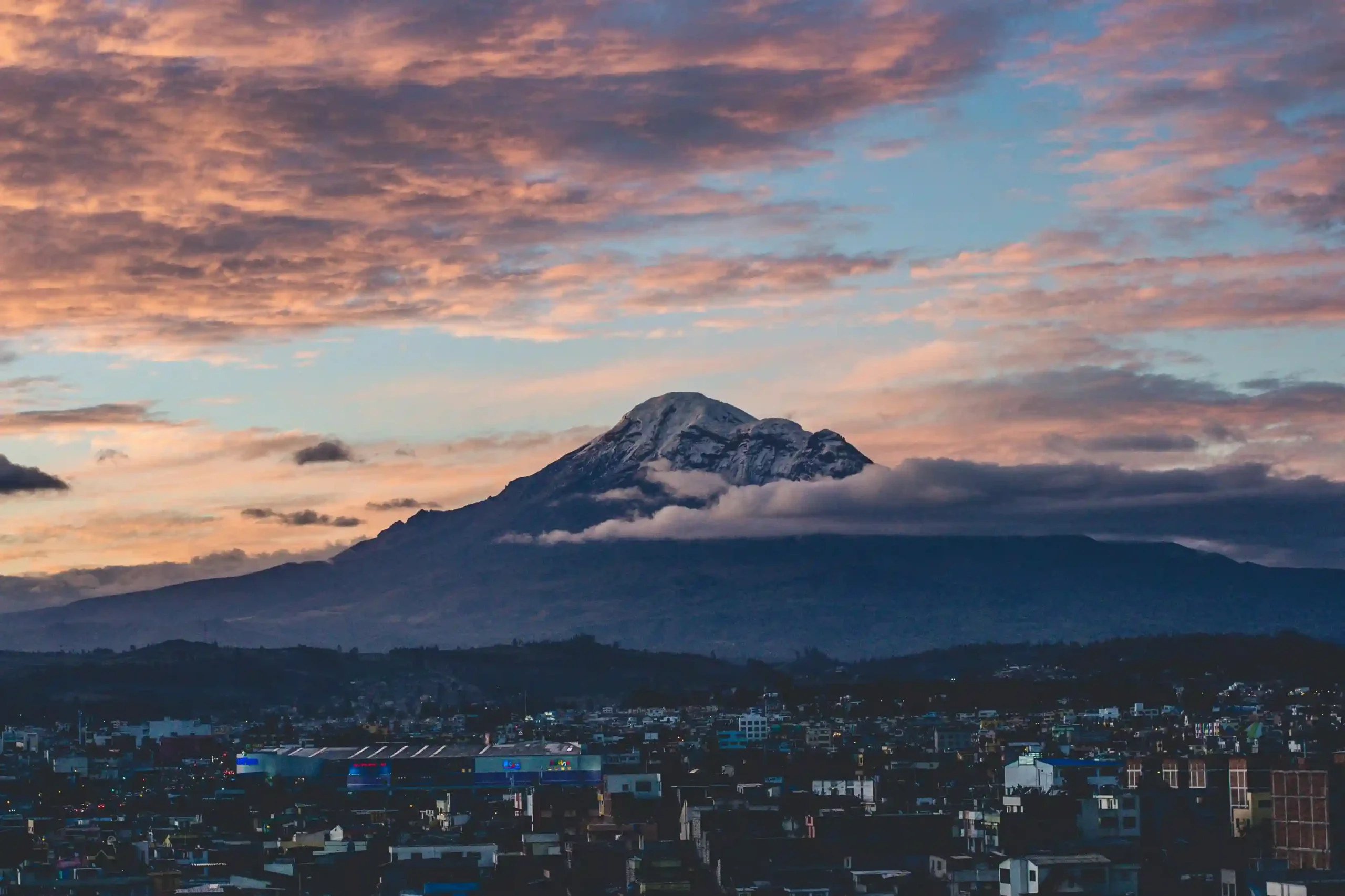
The Earth is not a perfect sphere: it is flattened at the poles and bulges at the equator. Therefore, points located on the equator are naturally farther from the planet's center than any point at higher latitudes. Chimborazo, located just over one degree south latitude, benefits from this equatorial bulge, and its summit is 6,384 km from the Earth's center—approximately 2 km farther than the summit of Mount Everest.
Según la información geográfica documentada sobre el Chimborazo, su última erupción conocida ocurrió hace aproximadamente 1.000 años. Hoy es considerado un volcán inactivo y su área de protección forma parte de la Reserva de Producción de Fauna Chimborazo, creada para conservar el páramo de alta montaña y la fauna nativa.
La reserva cubre más de 58.000 hectáreas repartidas entre las provincias de Chimborazo, Tungurahua y Bolívar. Su función va más allá del volcán: el páramo que protege alimenta los ríos que abastecen a buena parte de la sierra central ecuatoriana.
Ese páramo alberga además una de las poblaciones de camélidos silvestres más importantes del país. Las vicuñas fueron reintroducidas tras su extinción local y hoy se mueven en libertad alrededor del primer refugio, lo que convierte a la reserva en el mejor lugar del Ecuador para verlas en su entorno natural.
How to get to the Chimborazo volcano in Ecuador
Access to Chimborazo from Riobamba is direct and well signposted. These are the references to help you plan your trip:
| Starting point | Distance | Estimated time | Route |
|---|---|---|---|
| Abraspungo Estate | 34 km | 50 minutes | Riobamba–Guaranda Road |
| Riobamba Center | 38 km | 55 minutes | Riobamba–Guaranda Road |
| Quito | 210 km | 3.5 hours | Panamericana Sur + detour |
| Guayaquil | 270 km | 4 hours | Guayaquil–Riobamba Road |
| Ambato | 80 km | 1.5 hours | Panamericana Sur + detour |
The route from Riobamba ascends the Riobamba–Guaranda road to the signposted turnoff for the Chimborazo Reserve. From there, a well-maintained paved road leads to the parking area of the first refuge. A 4x4 vehicle is not necessary, although precautions are advisable during the rainy season.
Chimborazo Refuge Ecuador: the route to the summit
Chimborazo has three refuges that mark the different levels of access to the mountain. Each one involves different conditions and requirements.
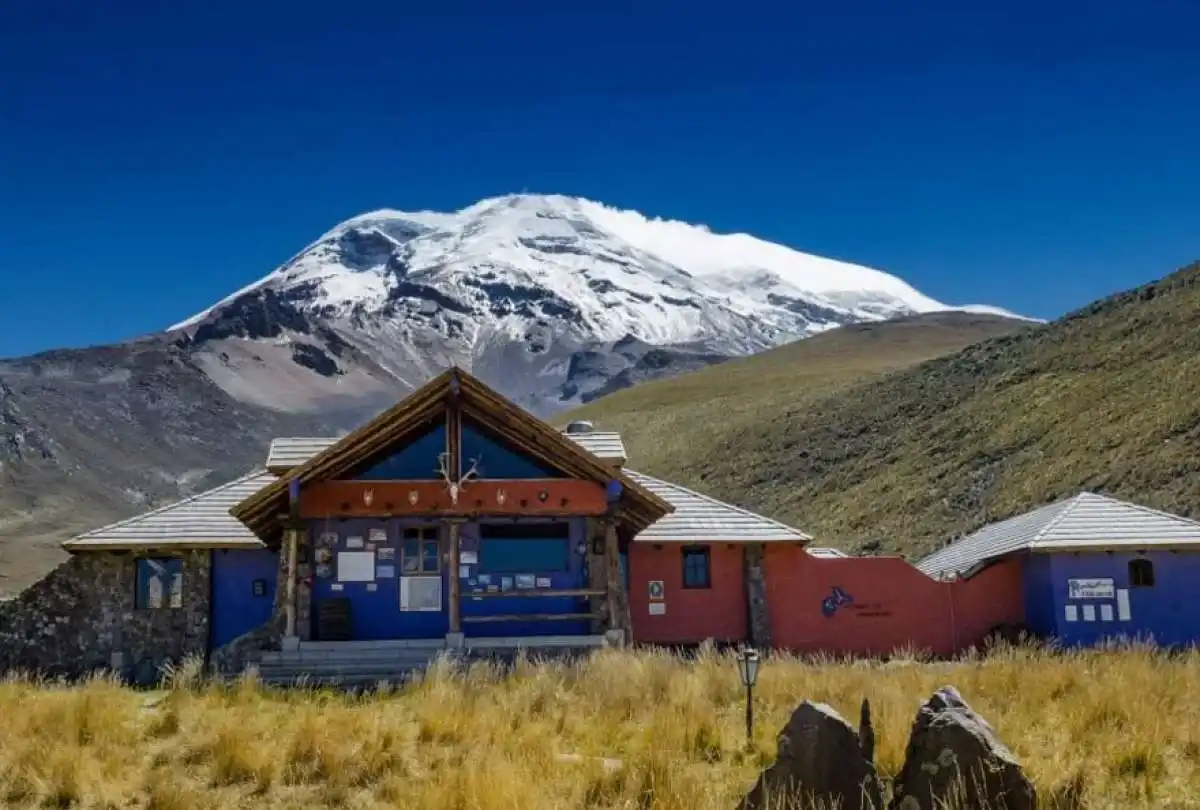
Carrel Refuge — 4,800 meters above sea level
It's the first and most accessible refuge. It's located at 4,800 meters above sea level, and the hike from the parking lot takes between 45 minutes and an hour at a leisurely pace. No prior experience or specialized equipment is required.
This level is recommended for most visitors, especially those traveling with family or who have no experience in high-altitude mountaineering. The páramo landscape, vicuñas grazing among the rocks, and the view of the glacier from the refuge are enough to make the visit truly memorable.
The refuge has a cafeteria, restrooms, and a small museum about the history of mountaineering on Chimborazo in Ecuador. Entrance to the reserve costs $2 for Ecuadorian citizens and $6 for foreigners.
Whymper Refuge — 5,000 meters above sea level
The second refuge is at 5,000 meters and requires a higher level of fitness. The trek from Carrel takes an additional 1 to 2 hours over steeper terrain with less oxygen. It is the usual starting point for mountaineering groups aiming for the summit.
To reach the Whymper, you don't need technical glacier equipment, but it is recommended to have acclimatized beforehand — ideally with a night in Riobamba or at the hacienda before the visit.
Summit — 6,268 meters above sea level
The ascent to the summit of Chimborazo is a high-altitude expedition requiring complete technical equipment, a certified guide, and a minimum of three days of acclimatization. It is not accessible to the average visitor. However, for those with glacier experience seeking one of the most challenging climbs in the Andes, Chimborazo is one of the most sought-after peaks on the continent.
El recorrido hasta el primer refugio es el más transitado, aunque no es el único. La reserva tiene senderos señalizados de distinta dificultad que recorren el páramo sin necesidad de ganar altura, una alternativa para quienes prefieren caminar más y subir menos. Las rutas están descritas en esta guía de senderismo en el Chimborazo.
What to bring when visiting Chimborazo, Ecuador
Proper preparation makes all the difference between a pleasant visit and a difficult experience. Here are some recommendations for visiting your first refuge:
- Warm clothing: The temperature at the Carrel refuge ranges from 0°C to 8°C. Bringing a waterproof jacket, hat, gloves, and scarf is essential.
- Hiking boots: the terrain from the parking lot to the refuge is uneven volcanic rock. It is not recommended to hike in city shoes or lightweight sneakers.
- Hydration and snacks: At higher altitudes, the body dehydrates more quickly. Bring at least a liter of water and some quick energy—nuts, energy bars, chocolate.
- High-factor sunscreen: UV radiation at 4,800 meters above sea level is significantly higher than at sea level. SPF 50 or higher.
In addition, it's advisable to get a good night's sleep beforehand and avoid strenuous activity in the hours leading up to your visit. Altitude affects everyone differently—walking slowly and breathing deeply is the best way to enjoy it without any problems.
When to visit Chimborazo, Ecuador
Chimborazo can be visited year-round, but conditions vary significantly depending on the season.
The dry season in the Ecuadorian highlands runs from June to September. During these months, clear days are more frequent, and visibility of the glacier and snow-capped peaks is better. It's the preferred time for photographers and mountaineers.
Between December and February, there is a second, drier season that also offers good conditions. The months with the highest rainfall—March, April, October, and November—do not prevent a visit, but they increase the likelihood of finding the volcano shrouded in clouds, especially in the afternoons.
The general recommendation is to leave early—before 8:00 a.m.—to take advantage of the morning visibility before the clouds arrive. In the dry months, mornings are usually completely clear until 10:00 or 11:00 a.m.
Esa temporada seca coincide además con las vacaciones escolares de la sierra, entre junio y agosto, que son los meses de mayor movimiento en la región andina. Quien viaje en familia durante ese período encuentra el panorama completo en esta guía de vacaciones de verano en la sierra.
The fauna of Chimborazo, Ecuador: vicuñas, condors, and the páramo ecosystem
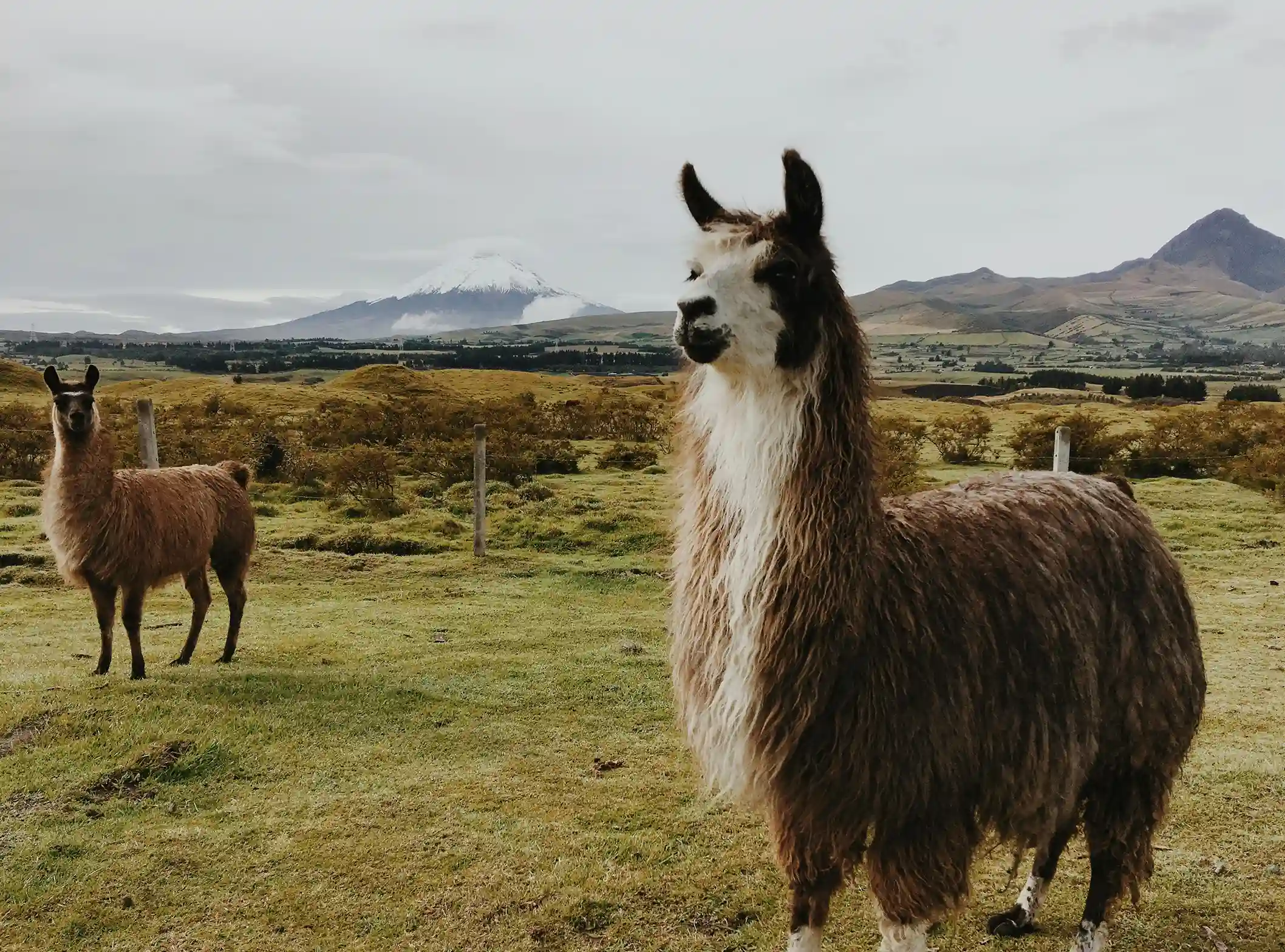
One of the most surprising aspects of visiting Chimborazo is encountering the reserve's native wildlife. Vicuñas—wild relatives of the llama, with incredibly fine wool and elusive behavior—move in herds across the high-altitude grasslands surrounding the first refuge. Seeing them up close is one of those unexpected and unforgettable moments.
Cinco especies concentran los avistamientos durante la visita. Conocer dónde aparece cada una ayuda a saber hacia dónde mirar.
| Animal | Where to watch it | Probability |
|---|---|---|
| Vicuña | Moorlands around the Carrel Refuge | Alta, manadas visibles casi todos los días |
| Calls | Near the communities at the entrance to the reserve | High |
| Andean condor | Corrientes de aire en las laderas del volcán | Media, más frecuente por la mañana |
| Curiquingue | Open moorland around the shelters | Alta, ave característica del páramo |
Además, el lobo de páramo aparece de forma esporádica en las zonas altas, sobre todo al amanecer. Por eso mismo, salir temprano suma algo más que buena visibilidad del glaciar.
It's also possible to spot Andean condors soaring on the updrafts of hot air rising from the volcano's slopes. With a wingspan of up to 3 meters, the condor is the largest flying bird in the world and one of the most powerful symbols of the Ecuadorian Andes.
The high-altitude páramo ecosystem surrounding Chimborazo is also one of the region's main sources of fresh water. The Chimborazo Wildlife Production Reserve covers more than 58,000 hectares, and its conservation is essential for the water supply of several provinces in the central highlands.
Qué ver más allá del volcán
La visita no se agota en los refugios. La reserva y sus alrededores concentran atractivos que muchos visitantes descubren recién al llegar, y que conviene tener en el plan desde antes de salir.
The Reserve's Interpretation Centre
Antes de subir, el Centro de Interpretación ofrece contexto sobre la geología del volcán, su historia eruptiva, la flora y fauna del páramo y el papel de la reserva en la conservación hídrica de la región. La parada toma entre treinta y cuarenta y cinco minutos, y cambia bastante la forma en que se lee el paisaje después.
The Desert of Palmyra
A diez kilómetros de la entrada a la reserva, sobre la vía Riobamba–Guaranda, aparece uno de los paisajes más inesperados de la provincia: dunas de arena volcánica en pleno páramo andino. El contraste entre la aridez de las dunas y la vegetación que las rodea sorprende incluso a quienes ya conocen el volcán.
The Pulingui community and alternative access
Pulingui San Pablo es el punto de partida de la ruta de Cuatro Esquinas, un acceso alternativo al volcán. El recorrido atraviesa páramos poco visitados y ofrece vistas desde ángulos que no se ven por la entrada principal. La comunidad trabaja con guías locales que conocen el territorio en detalle.
La historia de los hieleros
Hasta hace pocas décadas, los hieleros del Chimborazo subían al glaciar a cortar bloques de hielo para venderlos en los mercados de Riobamba y Guaranda. El Instituto Nacional de Patrimonio Cultural reconoce esa tradición como parte del patrimonio intangible del país.
Baltazar Ushca, el último hielero conocido, se convirtió en el símbolo de un oficio que desapareció con el retroceso del glaciar y la llegada del hielo industrial. Su historia sigue presente en el territorio, aunque el recorrido en tren que la contaba esté suspendido, como detalla esta guía de la ruta del tren.
Chimborazo from Hacienda Abraspungo: the best base for the visit
Hacienda Abraspungo está a menos de una hora del primer refugio, en la vía Riobamba–Guano. Quedarse la noche anterior permite además aclimatarse parcialmente a los 2.750 metros de Riobamba antes de subir a los 4.800 del volcán, y eso se nota en el cuerpo durante la caminata. Las habitaciones con desayuno buffet incluido permiten salir temprano sin resolver nada por fuera. El detalle completo de tiempos y alternativas está en esta guía sobre dónde dormir cerca del Chimborazo.
The hacienda coordinates guided excursions to Chimborazo with transportation included. It's the most convenient option for those who don't want to worry about the logistics of transportation or finding the correct turn on the route.
Después de la excursión, volver a la hacienda para el almuerzo en el Restaurante Abraspungo, con cocina andina e ingredientes de la provincia, es el cierre natural de un día en la montaña. Para sumar planes al resto de la estadía sirve esta guía de qué hacer en Riobamba, y las dudas sobre horarios y servicios están resueltas en las preguntas frecuentes.
Who is the visit to Chimborazo, Ecuador for?
Chimborazo is one of the few high-altitude volcanoes in the world that is completely accessible to visitors with no prior experience. This makes it an exceptionally democratic destination.
- Families with children: the route to the first refuge is short and well signposted. Children over 8 years old can easily complete it with appropriate clothing.
- Tourists with no mountain experience: no technical preparation is needed to reach the Carrel refuge. Just good clothing and a slow pace.
- Photographers and nature lovers: the moorland landscape, vicuñas, and glacier offer visual opportunities that have no equivalent anywhere else in Ecuador.
- Advanced mountaineers and trekkers: the ascent to the Whymper refuge and the summit expedition are next-level challenges for those seeking a complete technical experience.
Frequently Asked Questions about Chimborazo, Ecuador
How much does it cost to enter Chimborazo, Ecuador?
Entrance to the Chimborazo Wildlife Production Reserve costs $2 for Ecuadorian citizens and $6 for foreigners. Access to the first refuge (Carrel) is included in that price. Entrance to the second refuge (Whymper) may incur an additional cost depending on the season.
Is it possible to climb Chimborazo in Ecuador without a guide?
The first refuge (Carrel, 4,800 m) can be accessed without a guide. From the second refuge (Whymper, 5,000 m) onwards, a certified high-mountain guide is mandatory. For the standard tourist excursion to Carrel, independent access is perfectly safe with proper preparation.
How long does it take to reach the first refuge on Chimborazo?
From the parking lot to the Carrel refuge, the hike takes between 45 minutes and an hour at a leisurely pace. The terrain is volcanic rock with a moderate slope. With children or people who are not in good physical condition, it can take between 1 hour and 1 hour 15 minutes.
What is the best time to arrive at Chimborazo in Ecuador?
Ideally, you should arrive at the parking lot before 8:00 a.m. Mornings are generally clear, and visibility of the glacier and snow-capped peaks is best in the early hours. After 11:00 a.m., clouds begin to cover the volcano, especially during the wetter months.
How to get to Chimborazo from Riobamba?
Desde Riobamba se toma la vía Riobamba–Guaranda hasta el desvío señalizado hacia la Reserva Chimborazo, aproximadamente a 30 km del centro de la ciudad. Desde ahí, la vía asfaltada llega hasta el estacionamiento del primer refugio. El recorrido completo toma entre 50 y 55 minutos en vehículo propio.
¿El Chimborazo es apto para niños?
Sí, en la ruta al Refugio Carrel. Los niños mayores de 8 años hacen el recorrido sin dificultad con ropa de abrigo adecuada y caminando despacio. El encuentro con las vicuñas suele ser lo más memorable de la visita para ellos.
¿Cómo es el clima en el Chimborazo?
Frío e impredecible. La temperatura en el Refugio Carrel oscila entre 0 y 8 grados durante el día, y puede nevar en cualquier época del año. La temporada seca de junio a septiembre ofrece mejores condiciones, aunque el volcán igual puede cubrirse por la tarde.