La gastronomía andina en Riobamba es el resultado de siglos de historia concentrados en un plato. Cuando el hornado sale del horno de leña después de cuatro horas, cuando la fanesca se sirve únicamente durante Semana Santa o cuando el yaguarlocro llega humeante a la mesa en la mañana fría de los Andes, no es solo comida lo que se está probando — es una forma de entender el territorio, sus ingredientes y la gente que los trabaja.
La provincia de Chimborazo es una de las principales zonas agrícolas de la sierra ecuatoriana. Sus comunidades indígenas cultivan papas, habas, maíz, quinua, chocho y decenas de variedades de granos que abastecen los mercados de Riobamba con una calidad que no se consigue en ningún otro punto del país. La gastronomía andina en Riobamba no es buena por accidente — es buena porque los ingredientes que llegan a las cocinas de la ciudad son frescos, locales y con una historia detrás.
Esta guía recorre los platos que definen la gastronomía andina en Riobamba: qué son, cómo se preparan, qué los hace únicos y dónde encontrarlos.
Los ingredientes que definen la gastronomía andina en Riobamba
Antes de los platos, los ingredientes. La gastronomía andina en Riobamba no puede entenderse sin conocer los productos que la sostienen — y que vienen directamente de las comunidades agrícolas de la provincia de Chimborazo.
La papa es el ingrediente central. Ecuador tiene más de 400 variedades nativas de papa, y varias de ellas se cultivan en las faldas del Chimborazo: la chaucha, la súper chola, la leona negra. Cada variedad tiene una textura y un sabor diferentes, y los cocineros de Riobamba saben exactamente cuál usar para cada plato.
El maíz — en sus formas de mote, tostado, choclo y morocho — aparece en casi todos los platos de la gastronomía andina en Riobamba, tanto como ingrediente principal como acompañamiento. Los granos tiernos — habas, arveja, fréjol, chocho — son la base de las sopas y locros que definen la cocina serrana. Y la trucha de río, criada en las aguas frías de los ríos que bajan del Chimborazo, es el pescado de la sierra: firme, de sabor limpio y sin el exceso de grasa del pescado costero.
El hornado riobambeño: el plato emblemático
El hornado es el plato más representativo de la gastronomía andina en Riobamba — y el que más diferencia tiene respecto a cualquier versión preparada en otras provincias. Un cerdo entero marinado durante horas con achiote, ajo, comino y chicha de jora, horneado en horno de leña durante cuatro a seis horas a temperatura controlada. El resultado es una carne que se separa del hueso con solo presionarla, con una piel crujiente que lleva el nombre de «cuerito» y que es parte fundamental del plato.
La gastronomía andina en Riobamba sirve el hornado con mote cocido, papas enteras, maduro frito, tortillas de papa y ají de maní, una combinación de texturas y sabores que se ha perfeccionado durante generaciones en los mercados de la ciudad.
El Mercado La Merced los sábados desde las 7:00 de la mañana es el lugar correcto para comer hornado riobambeño. Los puestos que llevan más tiempo en el mercado tienen la receta más afinada, y la cola para sentarse lo confirma.
Saber qué platos definen la cocina de la provincia es la mitad del asunto. La otra mitad es dónde probarlos, porque el hornado de mercado y la cocina de hacienda son experiencias distintas y conviene elegir según el momento. Esta guía de restaurantes en Riobamba los ordena por tipo de experiencia.
El yaguarlocro: la sopa de fuerza de la sierra
El yaguarlocro es el plato más contundente de la gastronomía andina en Riobamba y uno de los más particulares de la sierra ecuatoriana. Su nombre viene del quichua: «yawar» (sangre) y «locro» (sopa de papa). Es exactamente lo que suena: una sopa espesa de papas con sangre cocida de borrego cortada en cubos, aguacate, maní tostado y hierbas andinas.
La sangre, lejos de ser un ingrediente intimidante, aporta una textura suave y un sabor mineral profundo que equilibra el cremoso del locro de papa. La gastronomía andina en Riobamba lleva generaciones preparando este plato en las mañanas frías de la sierra — y quienes lo prueban por primera vez sin saber exactamente qué es suelen quedarse sorprendidos por lo bien que sabe.
Es un plato de desayuno o almuerzo, nunca de cena. En los restaurantes tradicionales del centro histórico de Riobamba se consigue de martes a domingo.
La fritada con mote: energía andina
La fritada es otro pilar de la gastronomía andina en Riobamba. Trozos de cerdo cocinados primero en su propio jugo con cebolla, ajo y especias, y luego fritos en manteca hasta dorar. El resultado es una carne con exterior crujiente e interior jugoso que se sirve con mote, tostado, maduro y ají.
A diferencia del hornado — que requiere horno de leña y horas de preparación — la fritada se hace en paila de bronce sobre fuego directo, en un proceso que los riobambeños llaman «fritada en paila». Esa técnica le da un sabor específico que no se logra en sartén convencional. La gastronomía andina en Riobamba la sirve como plato de almuerzo en los mercados y como entrada en los restaurantes tradicionales.
La fanesca: el plato ritual de Semana Santa
La fanesca ocupa un lugar único en la gastronomía andina en Riobamba porque existe únicamente durante siete días al año. Se prepara exclusivamente en Semana Santa — desde el Lunes Santo hasta el Domingo de Resurrección — y su aparición anual tiene el peso de un acontecimiento.
La receta de la gastronomía andina en Riobamba usa doce granos tiernos — que representan simbólicamente a los doce apóstoles — en una base espesa de zapallo, zambo, leche y maní tostado, con bacalao remojado y desalado durante días. Los granos incluyen choclo, fréjol, habas, arveja, lenteja, chocho, melloco, garbanzo, maíz tostado y otros según la receta familiar.
La versión serrana de la fanesca — y en particular la riobambeña — usa granos frescos cosechados en la provincia de Chimborazo. No son granos de funda. Esa diferencia de calidad del ingrediente es perceptible desde el primer bocado.
El caldo de pata y el caldo de 31: las sopas de madrugada
La gastronomía andina en Riobamba tiene una categoría de platos que solo existen en ciertos horarios: las sopas de madrugada que se sirven en los mercados después de la medianoche para los trabajadores que empiezan el día antes del amanecer.
El caldo de pata — pata de res cocinada durante horas con maíz, maní y especias — y el caldo de 31 — una sopa densa de mondongo, maíz y maní — son parte de esa gastronomía andina en Riobamba que funciona en los márgenes del horario convencional. Probarlos en el Mercado La Merced a las 5:00 de la mañana, cuando la ciudad empieza a moverse, es una experiencia que va mucho más allá de la comida.
La trucha de río: el pescado de la sierra
La trucha de río es el pescado más representativo de la gastronomía andina en Riobamba y uno de los ingredientes que mejor define la cocina de la provincia de Chimborazo. Criada en los ríos fríos que bajan del volcán, la trucha riobambeña tiene una textura firme y un sabor limpio que no tiene nada que ver con la trucha de criadero industrial.
La gastronomía andina en Riobamba la prepara frita en harina de maíz con limón y ají, al vapor con hierbas andinas o en caldo con papas chauchas. El Restaurante Abraspungo trabaja con trucha de la región en su carta — una de las pocas opciones en la ciudad donde se puede comer trucha de calidad en un ambiente con historia.
Los dulces y panes de la gastronomía andina en Riobamba
La gastronomía andina en Riobamba también tiene una tradición de panadería y dulces artesanales que vale la pena conocer.
- Aplanchados: galletas crujientes de clara de huevo y azúcar, típicas de Riobamba. Se consiguen en las panaderías del centro histórico desde las 6:00 de la mañana.
- Cholas de Guano: pan dulce relleno de panela y especias del cantón vecino. Una de las especialidades más buscadas por quienes visitan la región.
- Empanadas de viento: masa frita rellena de queso fresco, espolvoreada con azúcar. Clásico de las panaderías artesanales y los mercados de la ciudad.
- Morocho con leche: bebida espesa de maíz morocho cocinado en leche con canela y panela. El desayuno tradicional de los mercados de Riobamba en las mañanas frías.
Estos dulces y panes de la gastronomía andina en Riobamba se consiguen en las panaderías del centro histórico, en los puestos del Mercado San Alfonso y en las tiendas de la calle Primera Constituyente.
La gastronomía andina en Riobamba en Hacienda Abraspungo
La gastronomía andina en Riobamba tiene en el Restaurante Abraspungo su versión más cuidada. La carta trabaja con ingredientes de la provincia de Chimborazo — trucha de río, granos frescos de temporada, lácteos locales y hierbas andinas — en una propuesta que combina la tradición serrana con técnica contemporánea.
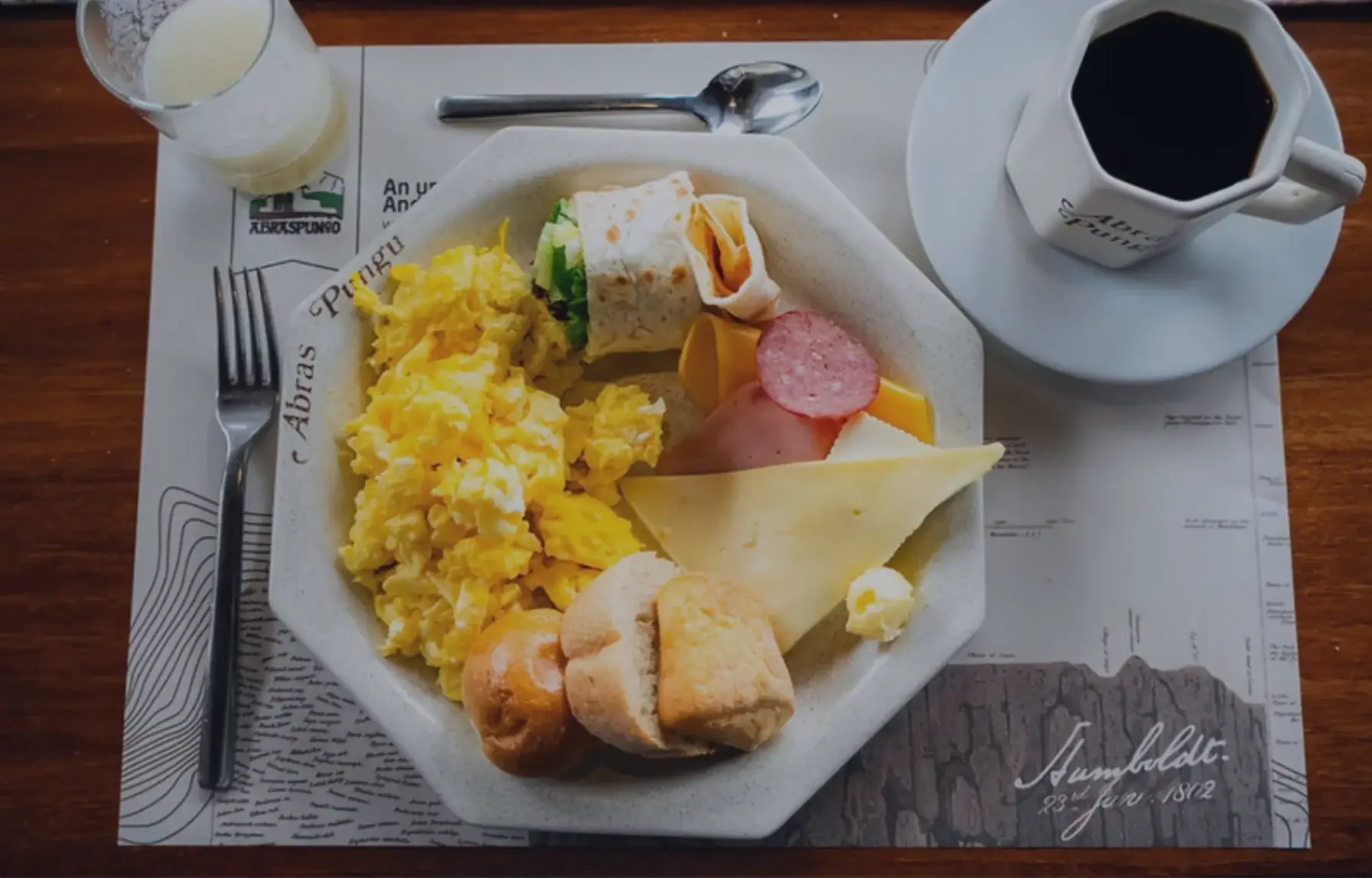
El desayuno buffet incluye productos frescos de la región: frutas de temporada, panes artesanales, jugos naturales y platos calientes con ingredientes locales. Es la forma más completa de empezar el día con la gastronomía andina en Riobamba antes de salir a explorar el Chimborazo o el centro histórico de la ciudad.
El restaurante abre de 06:00 a 22:00 todos los días para huéspedes y público en general. Para reservar mesa: WhatsApp al +593 997 683 450.
Dónde encontrar la gastronomía andina en Riobamba
| Plato | Mejor lugar | Horario |
|---|---|---|
| Hornado | Mercado La Merced | Sábados desde las 7:00 |
| Yaguarlocro | Restaurantes del centro histórico | Mañanas y mediodía |
| Fritada | Mercados y restaurantes populares | Mediodía |
| Fanesca | Toda la ciudad | Solo durante Semana Santa |
| Trucha de río | Restaurante Abraspungo | 06:00 a 22:00 todos los días |
| Aplanchados | Panaderías del centro histórico | Desde las 6:00 |
| Caldo de pata | Mercado La Merced | Madrugada y mañana temprana |
Preguntas frecuentes sobre la gastronomía andina en Riobamba
¿Cuál es el plato más representativo de la gastronomía andina en Riobamba?
El hornado riobambeño. Un cerdo horneado en horno de leña durante cuatro a seis horas, servido con mote, papas, maduro y ají. Es el plato más emblemático de la gastronomía andina en Riobamba y el que mejor diferencia a la cocina de la ciudad respecto a otras provincias de la sierra.
¿Dónde comer gastronomía andina en Riobamba?
Para cocina popular tradicional, el Mercado La Merced los sábados es insuperable. Para gastronomía andina en Riobamba con técnica contemporánea y ambiente de hacienda, el Restaurante Abraspungo es la referencia — abierto todos los días de 06:00 a 22:00.
¿En qué se diferencia la gastronomía andina en Riobamba de la de otras provincias?
La principal diferencia es el ingrediente. La provincia de Chimborazo tiene una tradición agrícola que abastece a las cocinas de Riobamba con granos, papas y trucha de calidad superior. El hornado riobambeño, por ejemplo, tiene una receta y una técnica de horno de leña que lo distingue del hornado de otras ciudades de la sierra.
¿Cuándo se puede comer fanesca en la gastronomía andina en Riobamba?
La fanesca es un plato exclusivo de Semana Santa. En la gastronomía andina en Riobamba se prepara desde el Lunes Santo hasta el Domingo de Resurrección — únicamente esa semana al año. Fuera de ese período no se consigue en ningún restaurante.
¿El Restaurante Abraspungo está abierto para el público en general?
Sí. El Restaurante Abraspungo está abierto al público todos los días de 06:00 a 22:00, sin necesidad de hospedarse en la hacienda. Es una de las mejores opciones de gastronomía andina en Riobamba en ambiente colonial. Reservas al +593 997 683 450.